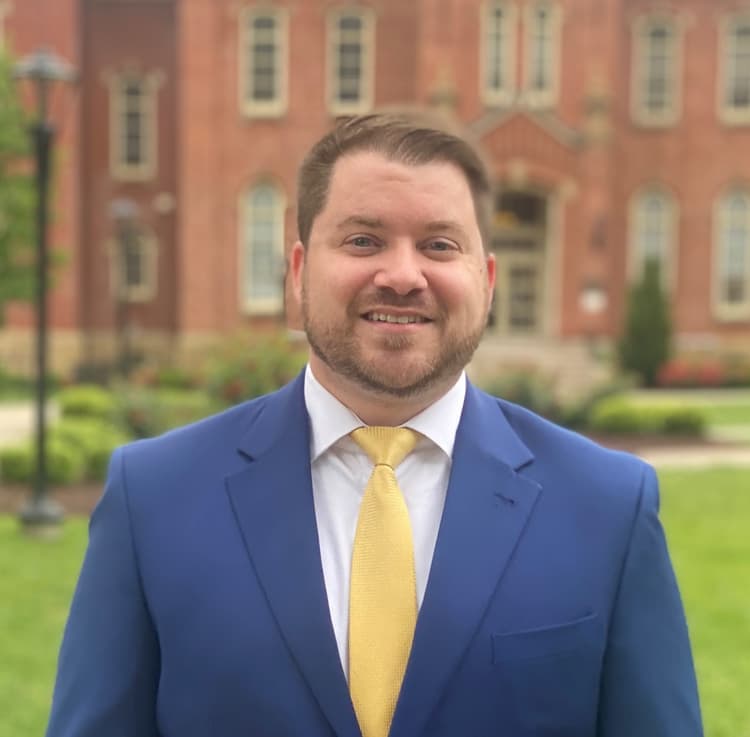
Attorney, administrator, and adjudicator working on institutional integrity, compliance, and risk.
I work where rules, and the systems that have to enforce them, meet real-world application. That used to mean creating governance systems that guided human work and guarded against bad actors. Now, the challenge is helping institutions reshape their systems to mix human work and AI without violating legal or ethical obligations. Notably, AI has created failure points that no longer require bad actors. Reasonable minds can differ, and the most well-intentioned action can surface considerable liability.
About
Paul Heddings is the Director of Academic Integrity for the West Virginia University System and System Adjudicator for Title IX and severe student conduct issues. He co-chaired the WVU Provost's Task Force on Artificial Intelligence and has briefed the WVU Board of Governors Audit Committee on AI and academic integrity policy. Before joining WVU, Heddings served as Chief Prosecutor for White Collar Crime and Public Corruption at the Jackson County Prosecutor's Office in Kansas City, leading the office's complex financial crime and public corruption prosecutions while also prosecuting violent offenses, sex offenses, and hate crime.
Heddings' current work focuses on the effect of AI on governance and systems, working with individuals, teams, and institutions to implement AI ethically, guard against failures, and provide meaningful education to promote shared understanding. As legal and regulatory landscapes continue to change, institutions must carefully consider the structure they place around operations to prevent liability now or in the future. The argument running through it is straightforward: AI did not just create new failure modes, it exposed which protections existed in name only.
He is co-founder and Executive Director of The Association for Academic and Professional Development (TAAPD), a consultancy that builds training, policy, and compliance systems for higher education, legal practice, and research integrity. TAAPD's faculty AI literacy module has been adopted institution-wide at Point Park University, and its student module is distributed nationally through VitalSource, with availability through Barnes and Noble College.
His commentary has appeared in Inside Higher Ed, and he has led roundtables and workshops at national conferences, giving tailored talks to faculty, administrators, and attorneys on the questions AI is forcing their institutions to answer.
Pre-legislating new technologies is hard. Pre-legislating them inside large organizations, while regulators are still working out their own positions, is nearly impossible. That is the situation most institutions now face with AI. I work with institutions on the questions that determine whether their AI governance holds up under scrutiny: how policies are written, whether they reflect what the institution can actually monitor, and who owns the system when it fails. Drawn from years of investigating and prosecuting institutional failures across state government, prosecution, and higher education, including fraud, embezzlement, tax evasion, public corruption, and organized crime, and from current consulting practice on AI governance and oversight.
02
Legal ethics and the practice of law in the AI era
The legal profession is navigating a patchwork of rules, opinions, and improvisations around AI. Courts are sanctioning attorneys for AI use while a sitting SCOTUS Justice urges students to learn AI before leaving law school. We don't yet know how courts or disciplinary bodies will analyze these uses when the challenges come.
The rules haven't changed, but the discovery risk has. AI is making sensitive material discoverable that no one realized they were creating. Remember when Facebook became popular, and suddenly you were worried about what a client was disclosing at any hour of the day? Now realize they have a little lawyer, therapist, and confidant rolled into a single app in their pocket. They think those chats are private, but the law tells us they're discoverable.
I write and present on the specific questions practicing attorneys face: harmonizing AI use with professional responsibility, where it crosses into competence and candor problems, and what bar associations and law schools owe practitioners trying to navigate the shift. CLE accredited in Texas, with Missouri and additional jurisdictions in development.
03
Academic integrity and AI in higher education
Academic Integrity Offices are absorbing the shock of AI cases, but what hasn't evened out is shared knowledge and language in the space. When students, faculty, and administrators are not using the same language or sharing baseline knowledge, no policy, however well written, will hold. I lead one of the largest such systems in the country and have spent the last four years rebuilding it around effective detection and holistic education. Over the past two years, my work has focused on what AI literacy actually requires from students, faculty, and institutions. My published work and presentations focus on what the next wave of AI-driven challenges to higher education looks like, and what offices like mine need from the field to meet it.
An argument that the next stage of AI in higher education will not be detection failures or content authenticity, but the procedural overload that follows when students use AI to argue every grade and decision.
Quoted by West Virginia Public Broadcasting on academic integrity philosophy and the role of AI in institutional conduct systems, in connection with work as co-chair of the WVU AI Task Force.
Interviewed by WDTV (CBS affiliate, Bridgeport, WV) on academic integrity, AI in higher education, and WVU's response to generative AI tools, in connection with work as Director of Academic Integrity.
American Conference of Academic Deans · February 2026
Resilience Under Pressure: Navigating AI-Escalated Conflict
Workshop for academic deans and provosts at the ACAD Annual Meeting in Phoenix, on the institutional risk created by AI-driven escalation in student conduct, grading disputes, and misconduct cases, and the policy and operational responses that hold up under pressure. Co-presented with Steve Smith, Co-Founder and Director of Legal Strategy at TAAPD. Heddings also facilitated roundtable discussions on identifying campus flashpoints and early intervention.
State Bar of Texas MCLE · March 2026
AI Tools, Confidentiality, and Security Risks
CLE program for practicing attorneys on the confidentiality and security risks created by AI tools in legal practice, accredited by the State Bar of Texas for one hour of ethics credit. Presented for The Association for Academic and Professional Development.
WVU Board of Governors Audit Committee · September 2024
Artificial Intelligence and Institutional Risk in Higher Education
Briefed the Audit Committee on the institutional risk artificial intelligence creates in higher education and the governance and operational responses required to manage it. The briefing covered enforcement strategy, policy adaptation, and the operational challenges of scaling academic integrity work in an environment of rapidly increasing AI-related cases.
WVU Faculty Senate · September 2025
AI, Academic Integrity, and the Importance of AI Literacy
Presented an AI literacy module to the WVU Faculty Senate covering AI policy development, the design of AI-resilient assignments, and guidance for instructors addressing AI concerns in their courses. Faculty survey results following the module showed 86% reporting valuable insights, 84% reporting increased confidence in addressing AI-related issues, and 86% finding the strategies applicable to their teaching.
University of Missouri-Kansas City · April 2021
White Collar Crime and Public Corruption in Kansas City
Guest lecture in the UMKC Criminal Justice and Criminology Department's “Crime in KC” course, covering specific cases from the Jackson County Prosecutor's white collar and public corruption work, the prosecutorial decision-making behind charging and trial strategy, and the institutional dynamics that shape complex financial and corruption investigations.
Contact
For speaking, consulting, writing, or interview requests: